Yesterday afternoon the fog came in over Patel Ranch and stayed a while. Low cloud drifted through the hills, hiding the grove, then pulling back to show it again — green slopes, avocado rows, and the ridges fading into gray.
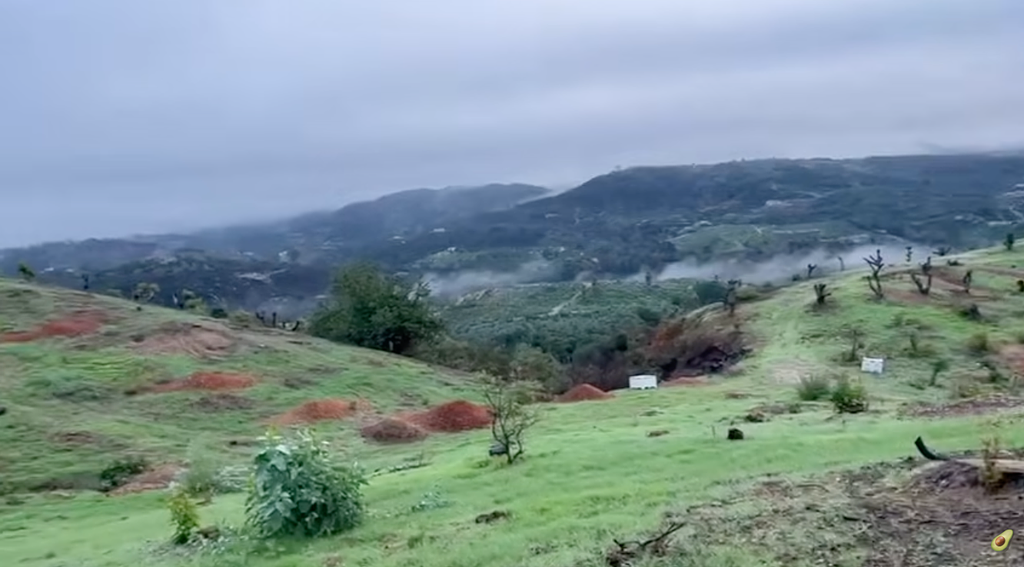
We filmed it for Instagram (watch the fog roll through the grove), and it is worth more than a pretty clip. In De Luz, fog is part of how this place grows avocados. Here is what it actually does — the good, the limits, and the one catch worth watching.
Free moisture, but not irrigation
Fog is a cloud sitting on the ground, and it leaves water behind. Leaves come out beaded, the soil surface dampens, and while the fog is in, the trees barely lose any moisture to the air — UC Cooperative Extension notes that on foggy mornings, water dripping off the trees means evaporative demand is effectively zero.
That matters in Southern California, where every drop counts. A foggy morning is a morning we are not fighting evaporation.
But keep it honest: fog is not irrigation. It wets leaves and the top of the soil. It does not soak down to the roots the way a real watering does. Our irrigation still runs on its schedule — the Hunter Hydrawise at the top of the ranch, watering on weather data — and the fog is a bonus on top, not a replacement.
A blanket on cold nights
The second thing fog does is hold heat. On a clear, still night, the ground gives up the heat it stored during the day straight to the sky, and temperatures can fall fast. A layer of low cloud slows that loss. A foggy night is usually a milder night than a clear one at the same forecast low.
That matters because Hass avocados are not built for real cold. UC Agriculture and Natural Resources puts leaf and fruit damage for Hass starting around 29 to 30 degrees, and a hard freeze below that can do lasting damage to the wood. November is when we start paying attention to overnight lows.
The catch: fog shows you the cold pockets
Here is the part that keeps us honest. Cold air is heavier than warm air — it flows downhill like water and pools in low spots. UC Cooperative Extension's frost research puts the difference at 5 to 10 degrees on the coldest nights between a good slope position and a low pocket a short distance away. That is often the whole margin between a tree coming through fine and one taking damage.
And fog is a tell. Where fog sits longest in the morning is usually the coldest spot on the property — the low ground where cold air settled overnight. So when the fog rolls in, we watch where it lingers. Our grove runs up the slopes, which is the right side of that equation: cold air keeps moving instead of pooling around the trees. The young regrowth coming back on our stumped trees gets the closest watch — new, soft growth is always the first to suffer on a cold night.
What we are watching this winter
This is the first winter with the rebuilt grove taking shape — stumped trees pushing new growth across our 20-acre De Luz grove, the soil sensors in the ground, and the irrigation running on schedule and weather. The fog mornings are a reminder that the microclimate here does some of the work for us, and that the work is mostly paying attention: overnight lows, where the fog sits, and which trees are most exposed.
Some days the best thing to do is stop and watch the fog move through the hills. Then get back to work.