
Curry Leaf Plants
Organic, seed-grown curry leaf plants (kadi patta, kari patta) from Southern California, for fresh leaves at home
Shop Curry Leaf PlantWhat Is a Curry Leaf Plant?
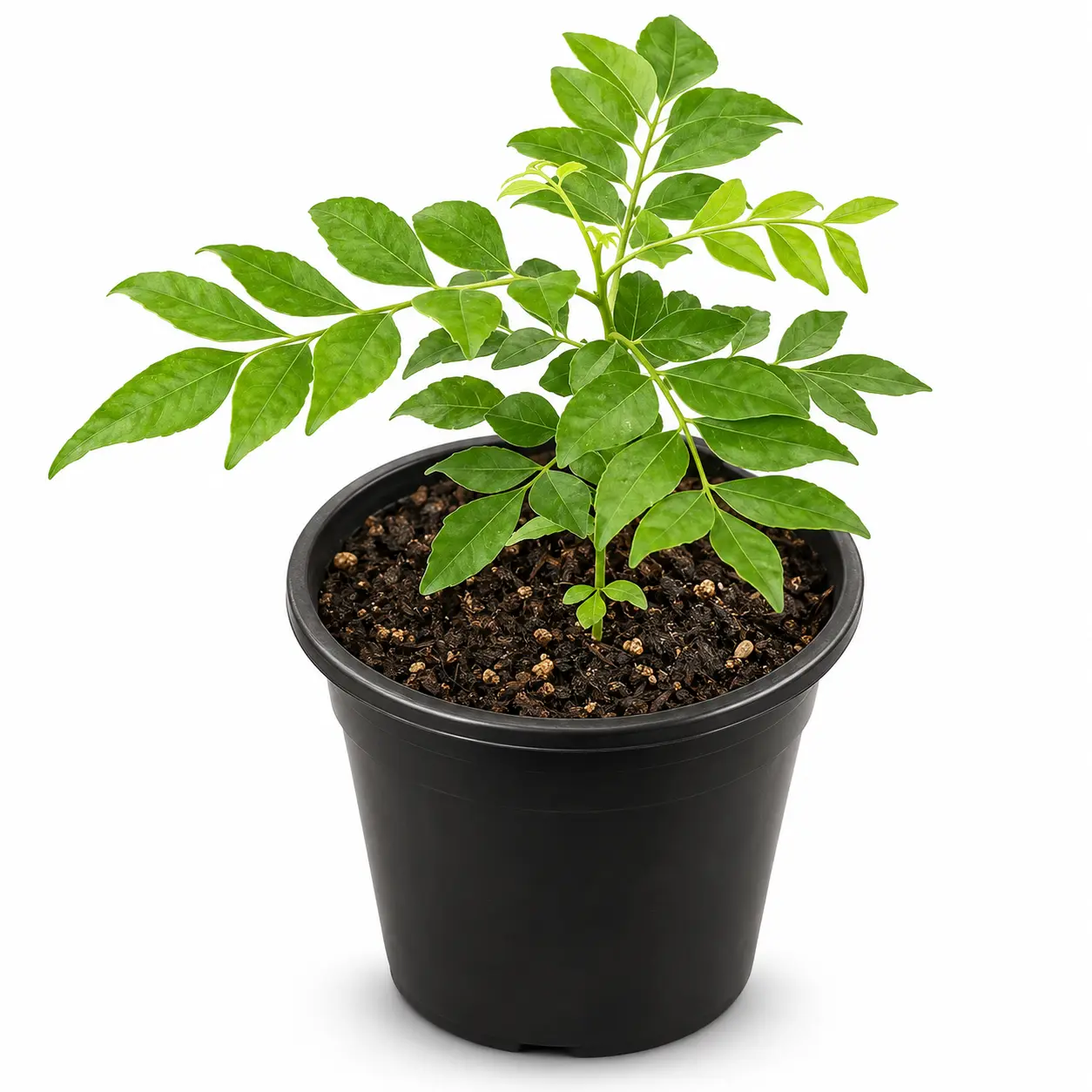
The curry leaf plant (Murraya koenigii), also called kadi patta, kadhi patta, kari patta, or karuveppilai, is valued for its aromatic leaves used in many South Asian dishes. It is sometimes called a curry leaf tree or sweet neem. A live plant lets home cooks harvest fresh leaves as it grows, rather than relying only on store-bought leaves. Curry leaf is different from curry powder and from the ornamental curry plant (Helichrysum italicum) often sold under other botanical names.
Why Grow Your Own?
Fresh Aromatic Leaves
Harvest fresh, fragrant leaves as you need them for cooking, rather than settling for dried leaves that have lost flavor and aroma.
A Useful Container Plant
Curry leaf plants thrive in containers on patios, balconies, or windowsills, making them perfect for gardeners of all space levels.
Enjoy Growing and Harvesting
Growing and harvesting your own herbs adds a rewarding dimension to home cooking and gardening.
A Thoughtful Gift
A live curry leaf plant makes a meaningful gift for a gardening or cooking enthusiast who enjoys South Asian cuisine.
Benefits of Curry Leaves
Curry leaves have been part of South Asian kitchens and traditional Ayurvedic practice for centuries. Beyond their unmistakable aroma, they are valued for what they bring to everyday eating.
Rich, Distinctive Flavor
Citrusy, nutty, and slightly savory, a few fresh leaves add depth to dishes that dried leaves or powders cannot match.
Natural Plant Compounds
Curry leaves contain antioxidant plant compounds such as flavonoids and alkaloids, and small amounts of vitamins and minerals including iron, calcium, and vitamin A.
Traditional Digestive Aid
In Indian home cooking, curry leaves are traditionally used to support digestion, which is one reason they are tempered into lentils, buttermilk, and chutneys.
Traditional Hair and Wellness Use
Curry leaves are also traditionally used in hair oils and home remedies passed down through families.
These are traditional uses and general nutrition information, not medical advice. Talk to your doctor before using curry leaves for any health condition, especially if you are pregnant, nursing, or on medication.
How to Cook with Fresh Curry Leaves
Fresh leaves are most flavorful when picked just before cooking. Rinse, pat dry, and use whole; the leaves are usually left in the dish and nibbled around or removed when eating.
Tadka (Tempering)
Sizzle a handful of leaves in hot oil or ghee with mustard seeds and cumin until crackling, then pour over dal, sambar, rasam, or yogurt dishes. Stand back, as the leaves will splatter.
Curries and Stir-Fries
Add leaves to the oil at the start of cooking vegetable sabzi, chicken or fish curries, and stir-fries to build a fragrant base.
Rice, Upma, and Poha
Temper with leaves for lemon rice, upma, poha, khichdi, and other everyday rice and grain dishes.
Chutneys, Podi, and Snacks
Blend fresh leaves into coconut chutney, grind roasted leaves into curry leaf podi (spice powder), or fold them into dhokla, vada, and batter-fried snacks.
Buttermilk and Drinks
Crush a few leaves into spiced buttermilk (chaas) for a cooling, aromatic drink.
Tip: Fresh leaves keep for about a week in the refrigerator, or freeze them in a bag to use straight from the freezer. Harvesting from your own plant means you never need to store them at all.
Cooking Supplies for Curry Leaf
As an Amazon Associate, Patel Ranch earns from qualifying purchases.
Curry Leaves as an Herb and Other Ways to Enjoy Them
Curry leaves are not only for cooking. Many families enjoy them straight from the plant as a simple everyday herb.
Chew Fresh Leaves
A common home practice is to chew 5 to 10 fresh, washed leaves, often on an empty stomach in the morning. The flavor is strong and slightly bitter, and the leaves can be swallowed or discarded after chewing.
Curry Leaf Tea
Steep a small handful of fresh leaves in hot water for several minutes. Add honey, ginger, or lemon if you like.
Juices and Smoothies
Blend a few leaves with water, lemon, or greens for a quick herbal juice or smoothie.
Dried Leaf Powder
Dry leaves in the shade or a low oven, grind them, and mix the powder into rice, buttermilk, yogurt, or spice blends.
Infused Oil
Gently warm leaves in coconut or sesame oil to make a traditional infused oil used in home hair care.
Because you will be eating the leaves directly, growing your own organic plant means you know exactly how they were raised.
Organically Grown from Seed in Southern California
Every Patel Ranch curry leaf plant is organically grown from seed right here in Southern California. That means each plant has been raised with the region's signature weather: cool nights and warm to hot daytime temperatures. These plants are already used to the same conditions you are likely to give them in a Southern California backyard, patio, or balcony, so they are well prepared to settle in and keep growing once they come home with you.
Curry Leaf Plant Care
Light
Provide plenty of bright light and acclimate gradually to strong direct sun.
Water
Water when the upper soil begins to dry; avoid keeping the container waterlogged.
Temperature
Protect from frost and prolonged cold; move container plants to shelter when needed.
Soil
Use a well-draining potting mix and a pot with drainage holes.
Harvesting
Harvest lightly from an established, actively growing plant; avoid removing too many leaves at once.
Organic Cultivation: Our curry leaf plants are organically grown from seed, ensuring you receive healthy, pesticide-free plants ready for your home garden.
Want more detail? Read our full curry leaf plant care guide for Southern California, including what to do when leaves turn yellow or the plant stops growing.
Shop Live Curry Leaf Plants
Order a live curry leaf plant (kadi patta) from Patel Ranch, available for ranch and Irvine pickup when in stock. Check the product listing for current availability, pricing, and shipping options.
View Curry Leaf Plant in ShopFrequently Asked Questions
Can curry leaf plants grow in containers?
Yes. Many home growers keep them in pots with adequate drainage and enough light.
Can a curry leaf plant stay outdoors year-round?
It depends on local temperatures; the plant needs protection from freezing weather.
Are curry leaves the same as curry powder?
No. Fresh curry leaves are leaves from Murraya koenigii, while curry powder is a spice blend.
Can you eat curry leaves raw?
Yes. Fresh curry leaves can be chewed raw, steeped as tea, or blended into drinks. If you have a health condition, are pregnant, or take medication, check with your doctor first.
Where are your curry leaf plants grown?
They are organically grown from seed in Southern California, so they are used to cool nights and warm to hot days.
Can I pick up my plant?
See the product listing for current Patel Ranch and Irvine pickup availability.
Do you ship curry leaf plants?
Check live product availability and the shipping destinations shown at checkout.
Explore More from Patel Ranch
Also explore our California Hass avocados and Valencia oranges from our family farm in De Luz, California. New to growing curry leaf? Start with our curry leaf plant care guide for Southern California.